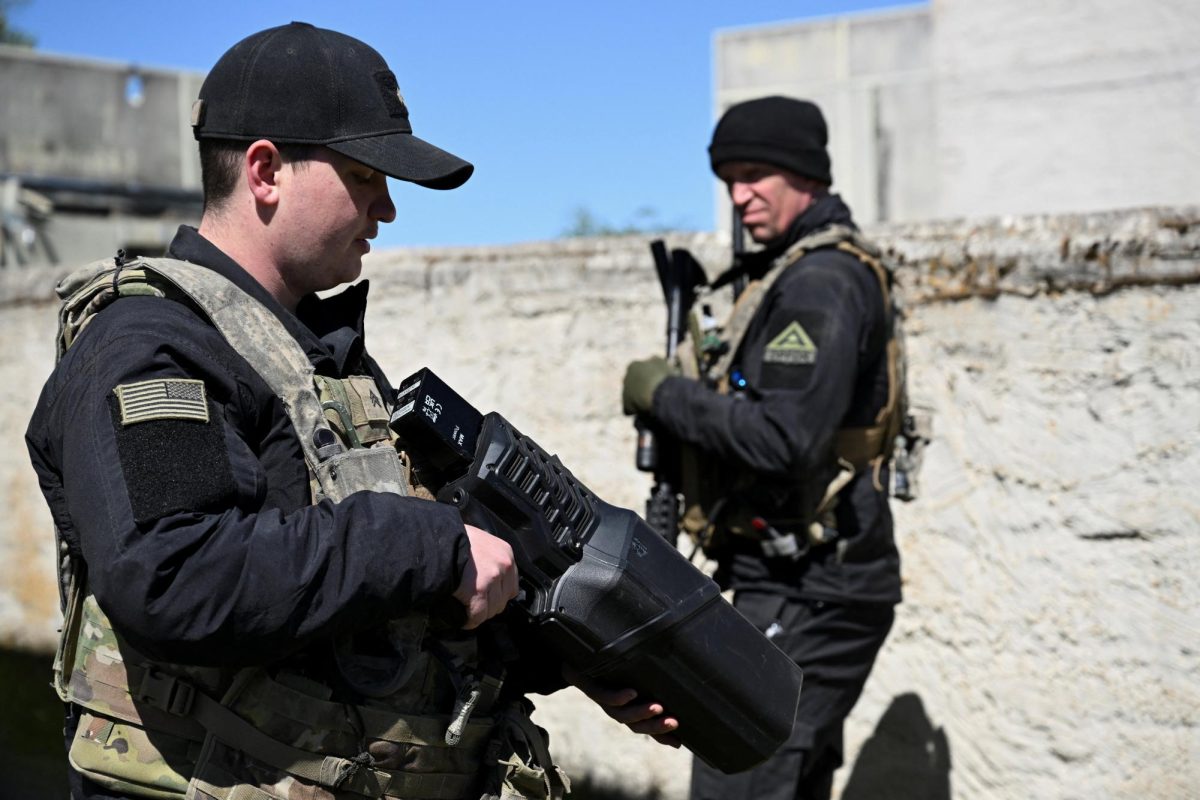

As of early 2026, the United States has entered a state of war, joining forces with Israel to fight against Iran. The initial conflict began when President Trump demanded that Iran disarm its nuclear program in fear of what could come. The United States launched Operation Epic Fury, combining powers with Israel with four main objectives in mind. Neutralize Iran’s nuclear threats, abolish Iran’s missile capacity, destroy the navy of Iran and cut off resistance by destroying command nodes.
This conflict in the middle east has had major effects on the United States and its citizens. There are many views on the current situation at hand but it ultimately boils down to if the U.S. should be in this war or not. Many citizens experience the effects of this conflict in their day to day lives with things like gas prices increasing, cost of being in war and cyber security and safety.
Since the war in Iran has begun, nearly 11 million barrels of oil are lost every day which in turn raise the price of gasoline across the country. Iran handles roughly 20% of the global oil supply and conflict in this area means oil shortages. Oil shortages frighten leaders around the world which leads to a spike in gasoline price which is reflected in an around 40% gas price increase in the United States since the war has started.
Another worry among citizens in the U.S. is the overarching cost of being in this war. As of late March, the Pentagon has already expended over $16 billion in weapons, resources and operation costs. While this amount is very substantial, the Pentagon requested an additional $200 billion in defense funding which only worsens the view of the public on the entire conflict considering the total debt of the United States approaching $40 trillion.
Looking past the physical conflict happening in Iran, a digital danger has arrived for United States citizens. Iran’s cyber army has been relentlessly attacking civilian infrastructure with malware and other cyber attacks. For citizens, this means a lack of privacy technical glitches which are caused by cyber attacks. These can make innocent people victims of the war, even if they aren’t on the front lines.
To understand why we are bearing these burdens, we must look beyond the stated objectives of Operation Epic Fury and examine the influence Israel has had on American foreign policy. For decades, the United States has operated under a framework of support for Israel, often framing it as a strategic alliance based on shared “democratic” values. However, this conflict has exposed the dangers of that dynamic when it becomes indistinguishable. The narrative that led to war, the demand for Iran to disarm or face attack, was a direct reflection of Israeli doctrine, which has consistently identified Iran’s nuclear program as a major threat. While the United States has its own strategic interests in the region, the question must be asked whether America would have launched such a massive attack if Israel’s immediate security were not intertwined with our own.
The problem is that this alliance has inverted the proper order of our national interest and well-being of Americans. Instead of Israel’s actions being guided by American strategic priorities, American policy now appears to be a function of Israel’s. The $18 billion already spent, the $200 billion now requested, the 40 percent rise in gas prices, and the cyber vulnerabilities we now face are the costs of a war that serves as an enforcement of another nation’s security perimeter. We are told we are fighting to neutralize Iran’s nuclear threats, but we are also, in effect, fighting to guarantee a monopoly on regional power for our “greatest” ally.
This is not an argument against alliances. It is an argument against allowing an alliance to dictate the terms of our nation. The bond between the United States and Israel should not be a blank check, written with only American blood and American treasures, to be cashed at the will of any administration in either country. When the Pentagon requests hundreds of billions in additional funding while our own national debt spirals, this jeopardizes American families who are now forced to restructure their lives around higher gas prices and a greater cost of living. And when our civilian infrastructure is under digital siege, the purpose of the war must be investigated beyond the official talking points.
Looking at the evidence, the answer to whether the United States should be in this war becomes disturbingly clear. We have been led into a conflict where the burdens are disproportionately ours, and the strategic objectives are no longer our own. Operation Epic Fury is truly a fitting name, for the fury we are experiencing is not just being directed at Iran. It is a direct attack on the United States and is a situation that people are too scared to acknowledge. It is being felt by the American people, who are left to pay the price for a war waged on terms that serve interests beyond our own.