
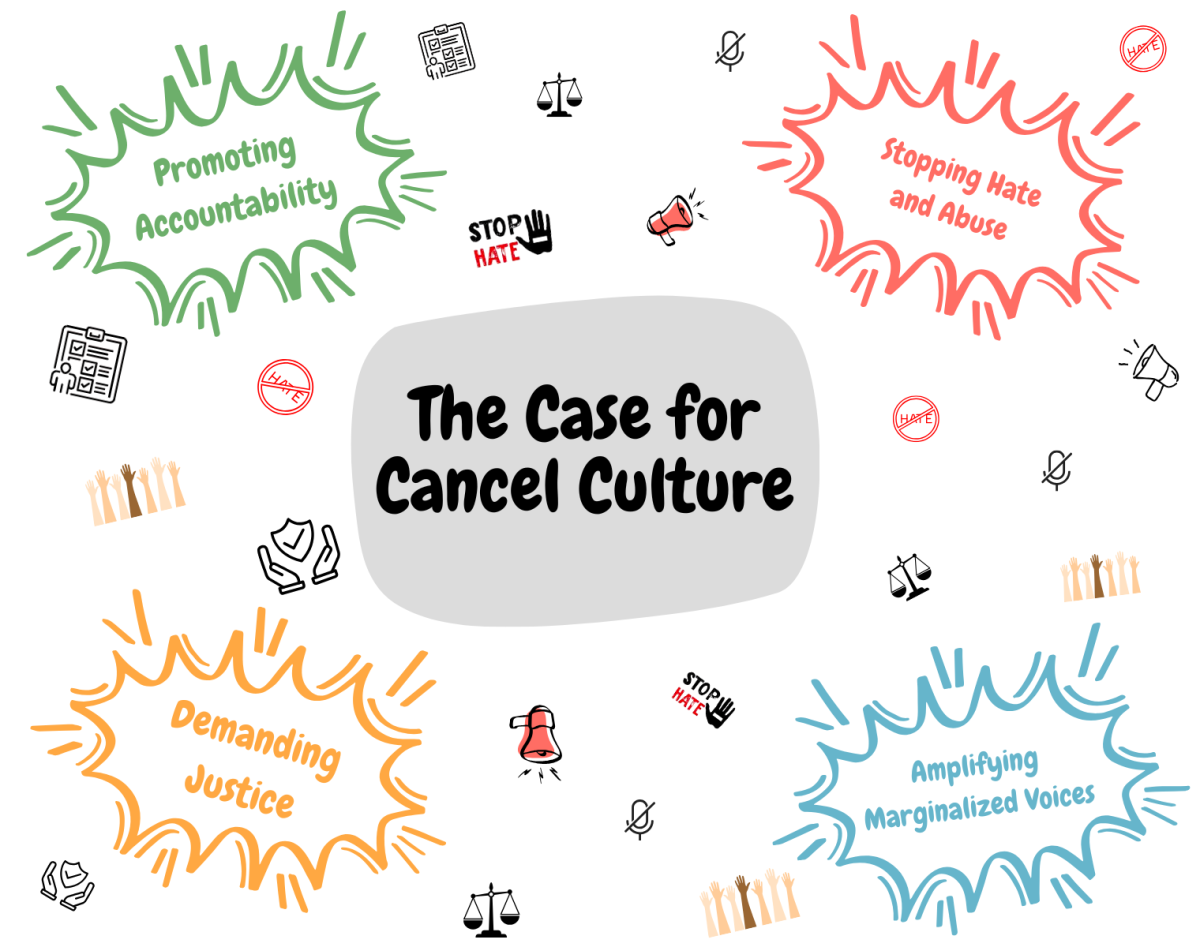
Cancel culture has become a common term in discussions of digital communication: it captures recurring dynamics of attention, amplification, and public reaction on social platforms. Cancel culture is commonly framed as social excess, yet it functions as a mechanism of informal accountability. In digital spaces, communities enforce norms where formal institutions often fail to act.
The phrase “cancel culture” is given a negative connotation, but it can actually do great things for people. Research from the National Library of Medicine suggests that cancel culture can help uplift the voices of those who have experienced harm, increasing their visibility and strengthening their ability to engage in collective efforts toward social change.
Cancel culture can hold powerful individuals and institutions accountable for their actions, which can create safer and more equitable spaces for everyone. Research suggests that public accountability encourages organizations and public figures to change harmful behavior and adopt fairer practices (frontiers). In this way, cancel culture can push society toward greater responsibility and systemic improvement rather than leaving harmful behavior unchecked.
By calling attention to offensive or dangerous behavior, it encourages people to reflect on their own actions and beliefs. Research shows that cancel culture can spark important conversations about issues like racism and inequality, encouraging people to reflect on social norms and promote positive change (Budding Sociologist). This can lead to culture shifts where communities become more respectful and inclusive over time.
Despite this, many argue that cancel culture has gone too far and has unnecessary hate toward individuals. Online shaming can become extreme, damaging reputations and leaving a little room for explanation or growth. According to Greater Good Magazine, this public backlash often promotes a harsh mob mentality rather than constructive discussion. This causes critics to say the negative effects of cancel culture can outweigh its benefits.
This is misguided because though backlash can promote harsh mob mentality it does encourage people to reflect on their own actions. Without people standing up against these important issues, others would not be held accountable for their actions.
According to RSIS International, who examined public reactions to cancel culture, calling out problematic behavior not only holds people responsible but can also prompt them to reflect on their actions and recognize why those actions were harmful.
A specific example of cancel culture making a good change is the #MeToo movement. As the #MeToo movement gained visibility, public pressure resulted in significant professional repercussions for numerous influential men accused of sexual misconduct, highlighting how collective reactions on social and traditional media can draw attention to previously ignored allegations and lead to accountability (The Impact of Cancel Culture). This instance is often discussed not just as online backlash, but as part of a broader social reckoning that changed workplace norms and public expectations around abuse and harassment.
Cancel culture can both harm and help, but when used responsibly, it gives voices to the unheard, sparks important conversations, and encourages accountability. While it can lead to excessive hate, focusing on fairness and reflection can turn it into a tool for positive change: It just depends on how people choose to use it.