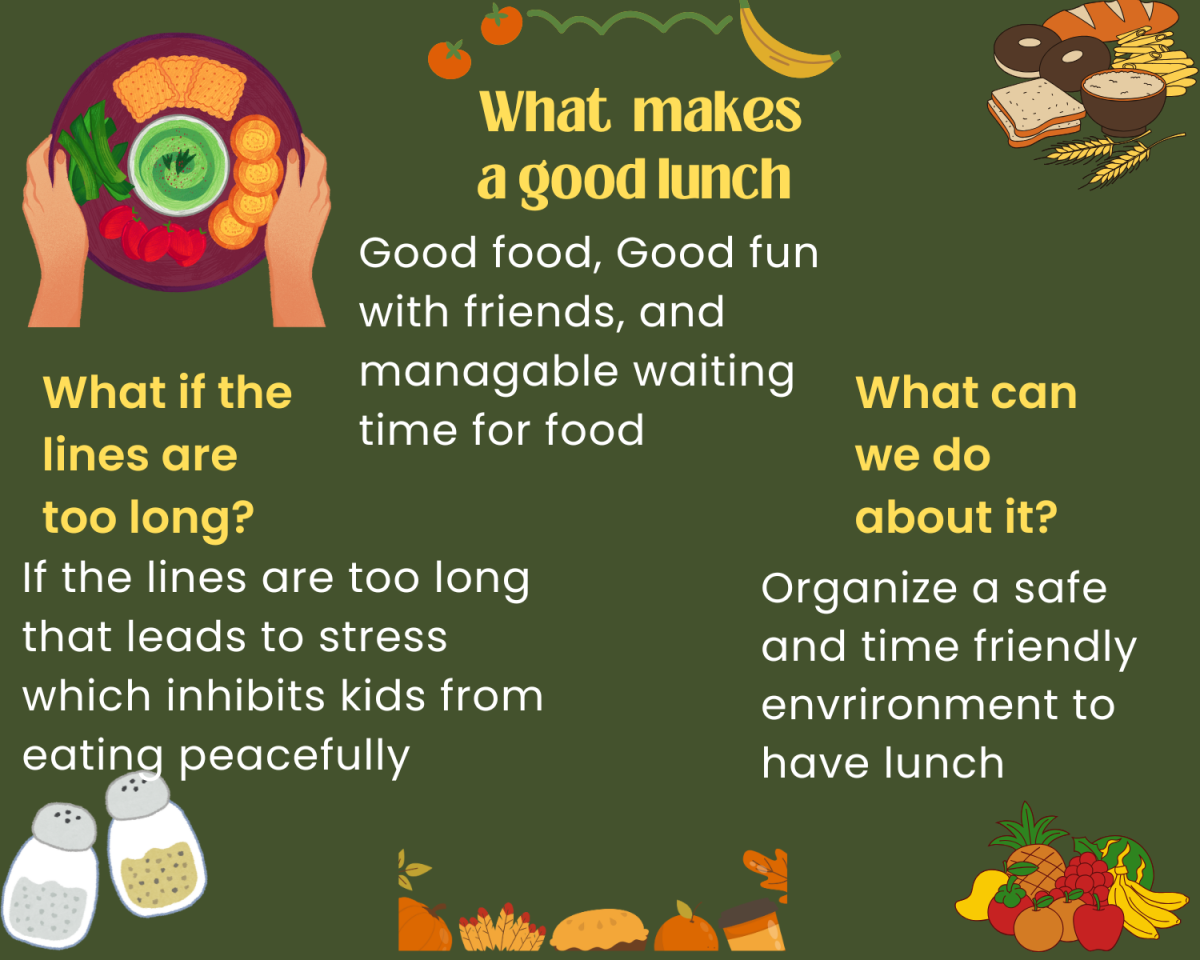
Nutrition is a pillar of children’s development. Especially in school, students need healthy sustainable foods in order to focus and succeed. Not being able to feed children can also become a problem among parents. Schools who have not created ample lunch lines to include all students, regardless of what time they enter, create a critical issue.
The overall population of students and children in general require nutrients, and less economically stable students who don’t have the luxury of bringing their own lunch rely on the nutrition schools provide in their free lunch programs. 60% of teachers say students should have at least 30 minutes to eat and with these long lunch lines students won’t be able to get proper nutrition.
This is not to mention that when students aren’t able to get the food they crave at the allotted times, it can weigh on their mental health. Students who aren’t able to receive their food during lunch time due to the limited lines makes it harder for them to fit in with the other students, as lunch is an extremely social setting. This causes an increase in stress, as 67% of students participate in these lunches.
The limits to the lines also coax bad habits for getting to class on time: not being able to get your food until the last minutes of lunch gives minimal time to eat, which can eventually harm instructional time. Students who are given these 20-30 minute lunch intervals are left hustling to class, as they are only able to indulge in their food for a third of the time.
Students who aren’t able to budget their time are bound to end up unable to enjoy their lunch. Lunch lines or not, it becomes very important for students to utilize their time. Underestimating the willpower of students weakens their motivation to do things for themselves, which makes them dependent on these lunches.
Conversely, the maturity of students is something to be focused on in high school. Students still need much guidance, and to throw them into a situation without proper nutrition is not well looked upon. As students continue to become restless without order, lunch line shortages also affect bullying. Without nutrition, the emotional state of students becomes tampered with and ultimately causes distress.
All together, limiting the ability for students to get food based on an insufficient amount of lines available attacks the credibility of the school. Rather than an attack, it should be a point to address and reasonably assess the situation.