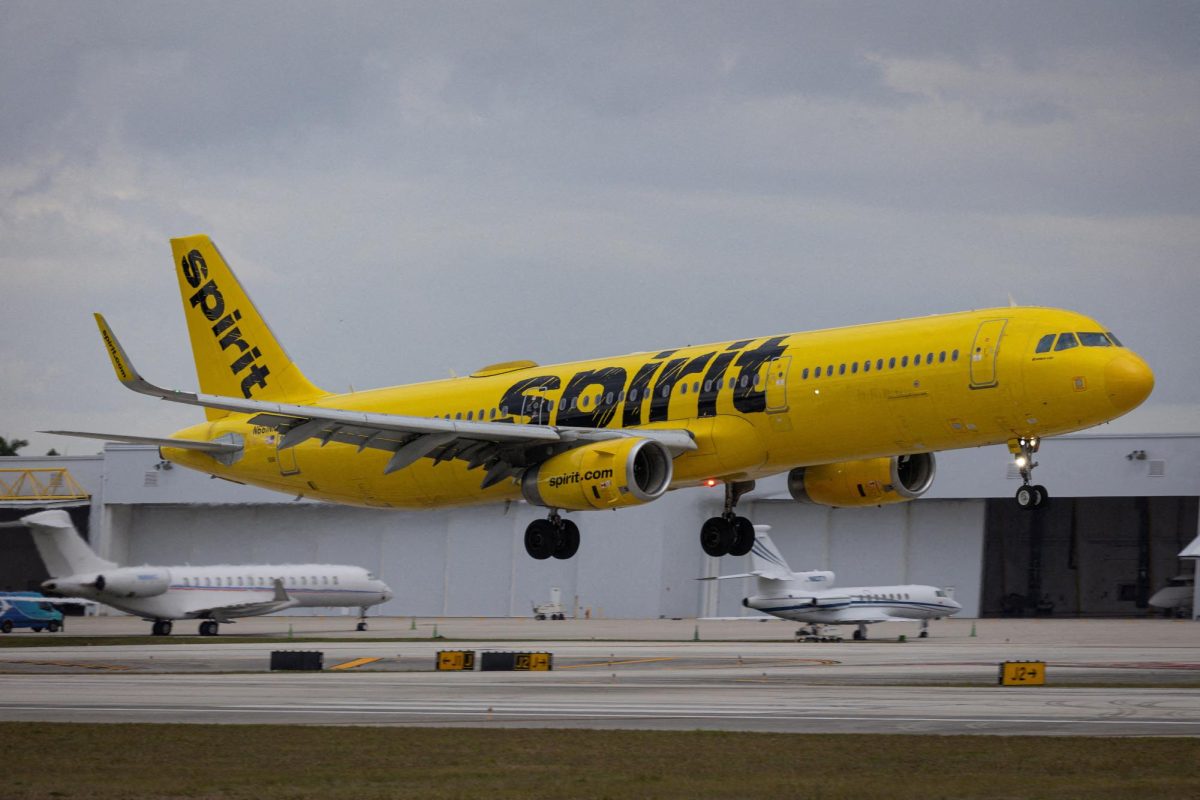
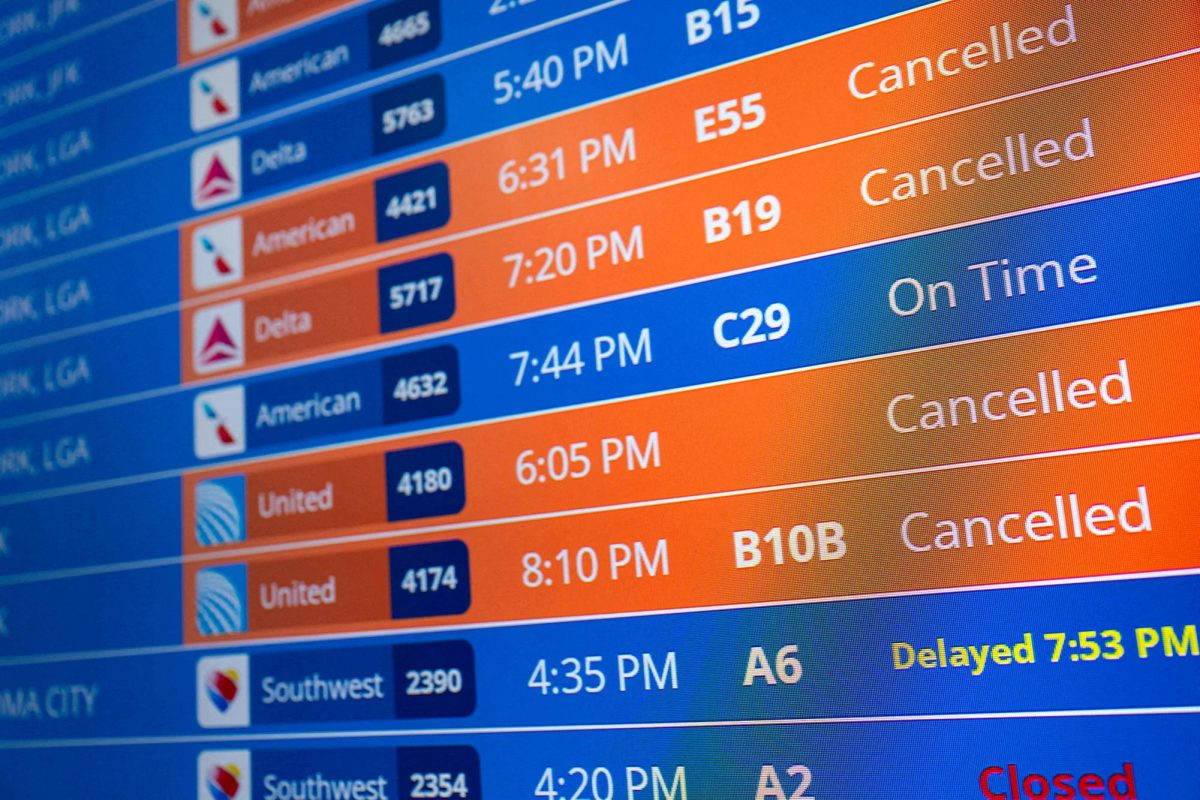
The recent federal government shutdown has significantly impacted air travel across the United States. From security checkpoints to control towers to airspace restrictions, pilots and passengers are facing longer wait times, flight delays, and concerns regarding the U.S. air system’s long-term resilience.
For licensed pilot and frequent flyer senior Cole Evans, the impact was immediate. Traveling through major hubs like the San Diego and Washington Dulles airports, he observed security delays not due to a lack of TSA staff, but because of inefficiently managed resources stemming from poor communication and coordination during the shutdown.
“They had some of the lanes shut down for the metal detectors, and overall, it just took a lot longer,” Evans said. “I noticed there were also a few more flight delays than usual.”
The complications extend far beyond passenger terminals. Evan’s own flight training was directly hindered by a Temporary Flight Restriction (TFR), a type of airspace closure he believes was heightened by the shutdown’s strain on resources.
“I tried to plan a flight up to Chino for my first solo cross country, but that was blocked,” Evans said. “I had to fly around that whole area, which added about fifteen minutes to my flight.”
The most critical weakness exposed by the shutdown, according to Evans, lies in the nation’s air traffic control system. He identifies “redundancy” as the key challenge, where even a minor issue in staffing can have major repercussions. In this system, each controller’s role overlaps slightly with those of others, ensuring that if one person or station is unavailable, another can immediately step in to maintain safety and efficiency.
“If you lose even one of those controllers, the redundancy is essentially gone,” Evans said. “You need each one to be able to maintain a blanket over the entirety of their airspace.”
This strain has been fairly obvious to international travelers. Sophomore Junwoo Kim, who traveled to South Korea during the shutdown, was met with unexpectedly long security lines upon his departure and return to the U.S..
“Normally, the lines are shorter, but recently, it was longer than I’ve seen before,” Kim said. “The process when I was in Korea was way smoother than it was in America.”
Kim’s experience highlights a lack of public awareness, leaving travelers unprepared for the consequences of the shutdown. This unexpected hassle, including slower document checks and noticeably reduced staffing at key security points, he believes, could damage tourism and the perception of U.S. air travel reliability.
“My parents weren’t aware, so we just had to deal with the consequences after,” Kim said. “Knowing that it might take longer, they have to have more preparations before they get to the airports, and I think that’s one major impact.”
While passengers felt the frustration on the ground, the operational effects extended directly to the flight deck. For airline pilot Rocky Collins, the shutdown resulted in a fundamental shift in pre-flight discipline and planning to manage the unprecedented delays and uncertainties.
“The entire aviation ecosystem was affected, which meant we had to build significant buffer time into our schedules,” Collins said. “I was arriving for pre-flight checks and briefings much earlier than usual to account for any potential bottlenecks, whether from air traffic control staffing or last-minute gate changes.”
Looking beyond the immediate delays, concern has shifted to whether these disruptions will have a lasting effect. While Evans does not foresee major air disruptions, he predicts a period of continued challenges and adaptation for everyone in the aviation system.
“I do think there’re going to be a lot of delays, and traveling as a whole is going to be a bit harder for the average person,” Evans said. “It’s going to be a bit of a challenge to navigate and adapt to these new conditions if air traffic controllers become more scarce.”
In the event of another government shutdown, local pilots have made the steps to protect the system clear: prioritize the people who keep air travel safe. Ensuring stability in this workplace is crucial to preventing future disruptions and maintaining public confidence.
“Sadly, this situation is a wake-up call that the smooth functioning of our national airspace should not rely on political negotiations,” Collins said. “Shielding the essential personnel, ranging from air traffic controllers to safety inspectors, should be the first priority. The traveling public deserves that certainty.”