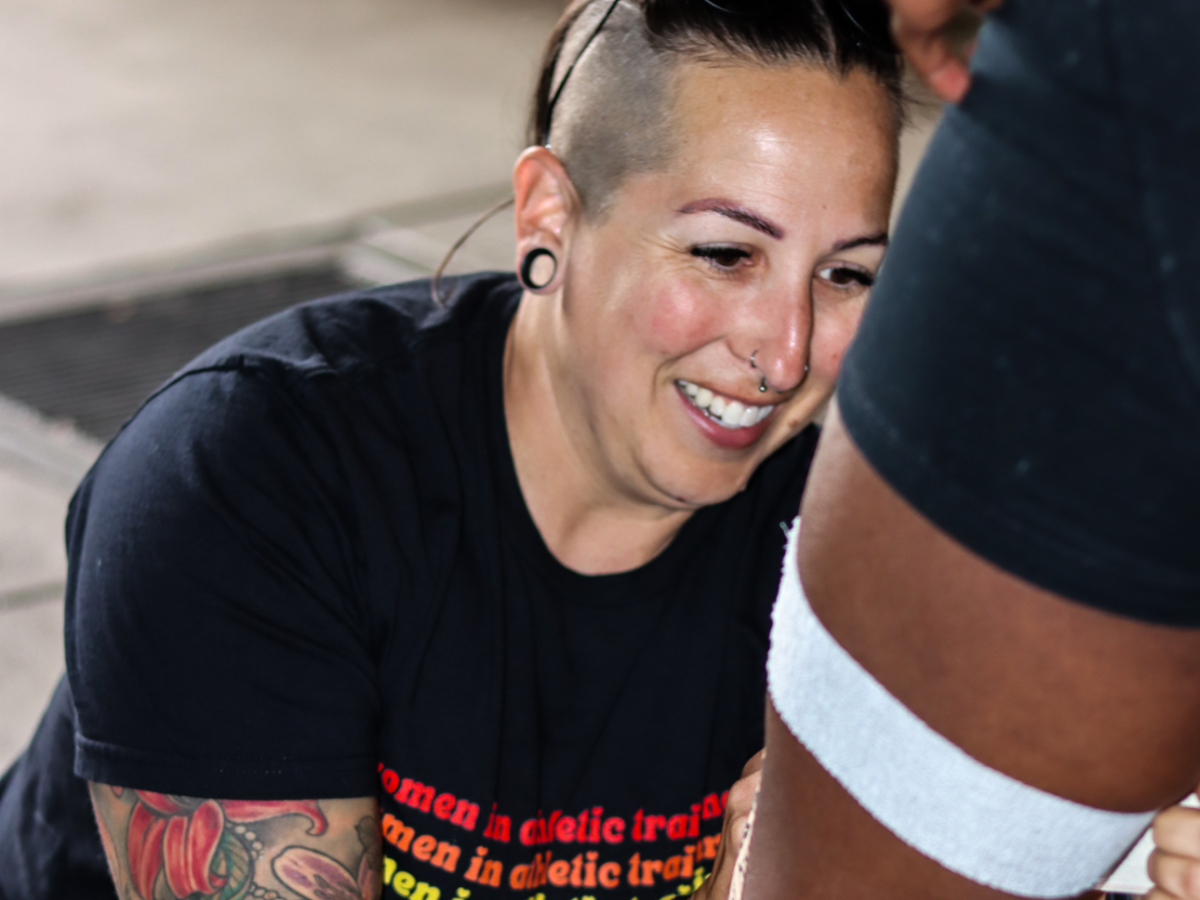
CHS athletic trainer Brianna Millard has recently won classified employee of the year and is dedicated to her job of helping students overcome their injuries. She is proud of her office being a safe space for many and has given peers an insight on what a day in her life looks like. She also addresses some common rumors in the athletic community.
Lancer Link: What does this award mean to you?
Brianna Millard: It’s awesome to be recognized for what I do, even though I’m just doing my job for the most part. But I feel like I got recognized for the above and beyond what I do. And it’s just always nice to be told, hey, good job… It’s really an awesome feeling.
LL: What is your favorite part about your job?
BM: The relationships I get to make with athletes, coaches, parents, admin, those relationships go way past graduating. It becomes more of a family.
LL: What is an average day like?
BM: Normally at lunch time it’s busy with people eating snacks, hanging out, or getting treatments. Everyone knows it’s kind of the cool hangout safe space that I love to be able to provide for student athletes… I’m here until a little around 9 o’clock at night, and that’s filled with injury evaluations, rehabs, pain control, treatments, documentation and boring paperwork. That’s part of the job.
LL: What are the preparations for the day like?
BM: [At lunch] we are getting water ready for the day, whether it’s practices or games, whether it’s pre treatments, taping, whatnot and then the after school rush.
LL: How has your job changed throughout the years?
BM: I’ve been here for 8 years, and for the most part it’s always been like that. I don’t think I’ve been busy at lunch before now, and I think people are realizing this is a fun place to go when we can’t go off campus.
LL: How do you stay ahead of new recovery trends?
BM: As a certified athletic trainer, you’re required to do 50 continuing education units every two years to recertify. I also stay ahead by going to conferences, seminars, online quizzes and hands-on activities.
LL: What is your most important piece of equipment?
BM: Probably the AED because it is a life saving device. I could get away with not having tape and not having fun rehab toys, but without the AED I wouldn’t have the opportunity to save a life.
LL: What is one common myth you hear about recovering from athletic related injuries?
BM: That RICE is your best friend. The guy that invented the program RICE took it away 15 years ago, and without people reeducating themselves, they have no idea that RICE is not the way to go anymore.
LL: What should someone do instead of RICE?
BM: We have new mnemonics. One of them is PEACE and LOVE. Another one’s called flush, but it’s all about using your own body as movement. We still compress, we still elevate. But it’s all about movement, proper nutrition and using your own body as a recovery tool.
LL: Who was your biggest mentor or role model?
BM: He is an athletic trainer at St Francis High School in La Cañada. His name is Eli Halleck. He was the last certified athletic trainer I worked with as a student athletic trainer in college, and till this day, he is still my mentor.
LL: If you could give students one takeaway what would it be?
BM: Do what makes you happy. No one says you have to follow the protocol or textbook. You need to do what’s right for you and whoever you’re taking care of.